
Medigap insurance is crucial for covering out-of-pocket costs associated with original Medicare, but beneficiaries must navigate important exceptions and costs. Recent updates to premiums and deductibles could significantly impact choices for seniors seeking coverage.
Understanding the significance of Medigap insurance is essential for seniors navigating the complexities of healthcare costs. With the potential for rising premiums and deductibles, as well as specific limitations on coverage, it’s vital to consider how these factors align with individual healthcare needs and financial situations, especially as changes loom for 2026.
Key Takeaways
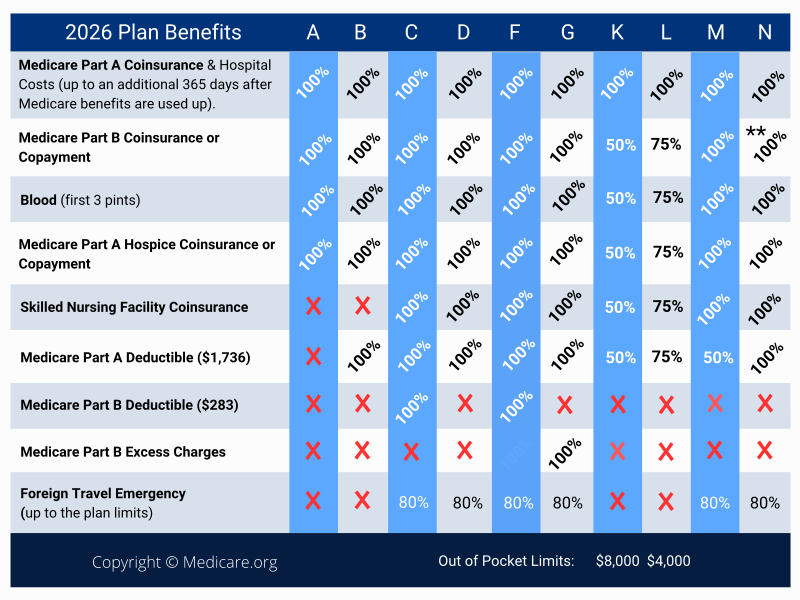
- Medigap Plan G is the most comprehensive option, covering skilled nursing facility coinsurance and the Medicare Part A deductible of $1,736 in 2026.
- High-deductible Plan G requires $2,950 in out-of-pocket spending before coverage begins, making it a cost-effective choice for those with infrequent healthcare needs.
- Medigap plans cannot cover costs associated with Medicare Advantage plans, limiting their use to original Medicare beneficiaries.
- The 2026 Medicare Part B deductible will increase to $283, affecting overall out-of-pocket costs for beneficiaries.
- Guaranteed issue rights allow coverage for pre-existing conditions without extra charges during the initial enrollment period.
Related questions people ask
- What is a Medicare supplement plan?
- What does a Medicare supplement plan cover?
- What is a Medigap plan?
- What does a Medigap plan cover?
- What is the difference between Medicare supplement and Medigap?
- What are the best Medicare supplement plans?
- What are the disadvantages of a Medigap plan?
- How much does a Medigap plan cost?
- How do Medigap plans work?
- Is Medigap insurance worth it?
- What is the cost of Medicare Plan G?
- What does Medicare Plan G cover?
- What is the deductible for Medicare Plan G?
- What are the eligibility requirements for Medicare supplement plans?
- What are the restrictions for Medicare supplement insurance?
- What are the alternatives to Medicare supplement plans?
- Are all Medigap Plan G the same?
- What is the coverage gap in Medicare?
- What is the best Medigap plan for seniors?
- What is the cost of AARP supplemental insurance?
- Does AARP cover Medicare deductible?
Understanding the Comprehensive Coverage of Medigap Plan G
Key Benefits of Medigap Plan G
Medigap Plan G stands out as the most generous option among Medigap plans, designed to help cover various out-of-pocket costs associated with Original Medicare. This plan not only covers skilled nursing facility coinsurance but also addresses Part B excess charges, ensuring that beneficiaries are better protected against unexpected medical expenses.
In 2026, Plan G will cover the Medicare Part A deductible, which is set at $1,736, further enhancing its value for seniors who may face significant hospital costs. By providing such extensive coverage, Plan G is often viewed as a leading choice for those newly eligible for Medicare.
High-Deductible Plan G Coverage Details
The high-deductible version of Plan G offers a unique approach to managing healthcare costs. Once the deductible threshold of $2,950 is met in 2026, this plan covers 100% of both Part A and Part B charges, making it an attractive option for individuals who do not frequently require medical services.
This plan’s structure allows for lower premiums, appealing to generally healthy seniors who want to minimize their monthly expenses while still having a safety net for major healthcare needs.
Evaluating the Costs Associated with Medigap Plans
Premiums and Deductibles for Medigap Plan G
While Medigap Plan G provides extensive coverage, it typically comes with higher premiums compared to other Medigap options. However, the high-deductible version of Plan G offers significantly lower premiums, making it a more budget-friendly choice for those who are less likely to need frequent medical care.
Premiums can vary based on factors such as discounts for non-smokers and payment methods, which adds another layer of consideration for seniors when selecting a plan.
Out-of-Pocket Costs for High-Deductible Plan G
In 2025, the high-deductible Plan G requires $2,870 in out-of-pocket spending before coverage kicks in. Additionally, enrollees must first pay the Part B deductible of $257, which adds to the initial costs before the plan begins to provide benefits.
For those hospitalized in 2025, the financial burden includes the Part A deductible along with additional out-of-pocket expenses, underscoring the importance of understanding these costs when considering enrollment.
Recognizing Important Exceptions in Medigap Coverage
Limitations of Medigap Plan G
Despite its comprehensive nature, Medigap Plan G has specific limitations that beneficiaries must be aware of. Notably, it cannot cover costs associated with Medicare Advantage plans, which means that those enrolled in Medicare Advantage will not benefit from Medigap coverage.
Furthermore, while Plans F and G are the only Medigap plans that fully cover Part B excess charges, Medigap does not extend to dental, vision, or hearing services, which are often needed by seniors.
Eligibility Considerations for Medigap Plans
Understanding Guaranteed Issue Rights
Guaranteed issue rights play a critical role in Medigap enrollment, ensuring that individuals can obtain coverage for pre-existing conditions without incurring additional charges. However, after the initial enrollment period, many states allow insurers to require medical underwriting, which can complicate the process for those looking to switch plans.
Changes in health status can further complicate the ability to switch plans, as medical underwriting rules may lead to higher premiums or denial of coverage altogether.
Recent Updates Impacting Medigap Plans
Changes for 2026 and Beyond
As we look ahead to 2026, several important updates will affect Medigap plans. The Medicare Part B deductible will rise to $283, which is higher than in previous years, impacting overall out-of-pocket expenses for beneficiaries.
Additionally, the high-deductible Plan G’s threshold will increase to $2,950, and some insurers are expected to reduce the number of Medigap plans offered, making it essential for seniors to stay informed about these changes.
Practical Tips for Choosing the Right Medigap Plan
Evaluating Your Healthcare Needs
When selecting a Medigap plan, it’s crucial to consider your healthcare usage. For those who generally maintain good health, the high-deductible Plan G may provide a cost-effective solution with lower premiums, while still offering protection against significant medical expenses.
However, switching from high-deductible to standard Plan G can be costly due to underwriting rules, so careful consideration is necessary.
Comparing Medigap and Medicare Advantage
Medigap plans typically offer greater provider flexibility and more predictable costs compared to Medicare Advantage plans. It’s important for beneficiaries to weigh the benefits of premium savings against the desire for maximum cost predictability when making their choice.
Reviewing the Annual Notice of Change is also advisable for those already enrolled in a Medigap plan, as it provides updates on any changes to coverage or costs.
Making Informed Decisions About Medigap Insurance
Medigap Plan G provides broad coverage, making it suitable for many seniors who want to mitigate their out-of-pocket healthcare costs. As recent updates impact costs and coverage options, evaluating your healthcare needs is essential to choose the most appropriate Medigap plan that aligns with your financial situation and health requirements.
Page content independently curated and maintained by David W. Bynon, Medicare Technical Operator, using a standardized, data-driven methodology designed for accurate, non-commercial Medicare plan interpretation and resolution.