

When you first enroll in Medicare, one of the biggest decisions you’ll face is whether to get coverage through a Medicare Advantage plan or a Medicare Supplement (Medigap) plan.
Both help you manage healthcare costs — but they work very differently. Understanding the difference now can save you frustration and unexpected bills later.
Understanding Original Medicare
Before comparing Medicare Advantage and Medicare Supplement, it helps to start with the basics.
Original Medicare is the federal program that includes:
- Part A (Hospital Insurance): Covers inpatient care, skilled nursing, hospice, and some home health care. Most people get it premium-free if they’ve paid Medicare taxes for about 10 years.
- Part B (Medical Insurance): Covers doctor visits, outpatient care, preventive services, and medical equipment. It comes with a monthly premium, usually deducted from your Social Security check.
Original Medicare covers a lot — but not everything. You’ll still pay deductibles, coinsurance, and copayments out of pocket. That’s why many people add either a Medicare Supplement plan or enroll in a Medicare Advantage plan.
Medicare Advantage (Part C)
Medicare Advantage plans are offered by private insurance companies approved by Medicare. When you join one, it replaces your Original Medicare coverage — but you’ll still stay in the Medicare program.
How Medicare Advantage Works
- All-in-One Coverage: Combines Part A, Part B, and often Part D (prescription drugs).
- Network-Based: Most plans use provider networks. HMOs generally require you to stay in-network, while PPOs offer more flexibility at a higher cost.
- Extra Benefits: Many plans include dental, vision, hearing, fitness programs like SilverSneakers, or transportation assistance.
- Variable Costs: Premiums are usually low (sometimes $0), but expect copays, coinsurance, and yearly out-of-pocket maximums.
If you like convenience, added perks, and don’t mind using network providers, a Medicare Advantage plan could be a good fit.
Medicare Supplement (Medigap)
Medicare Supplement plans, often called Medigap, work alongside Original Medicare. They don’t replace it — they fill the gaps in what Medicare doesn’t pay.
How Medigap Works
- Predictable Costs: Covers Part A and Part B deductibles, copays, and coinsurance.
- Freedom to Choose: You can see any doctor or specialist who accepts Medicare — no referrals or networks.
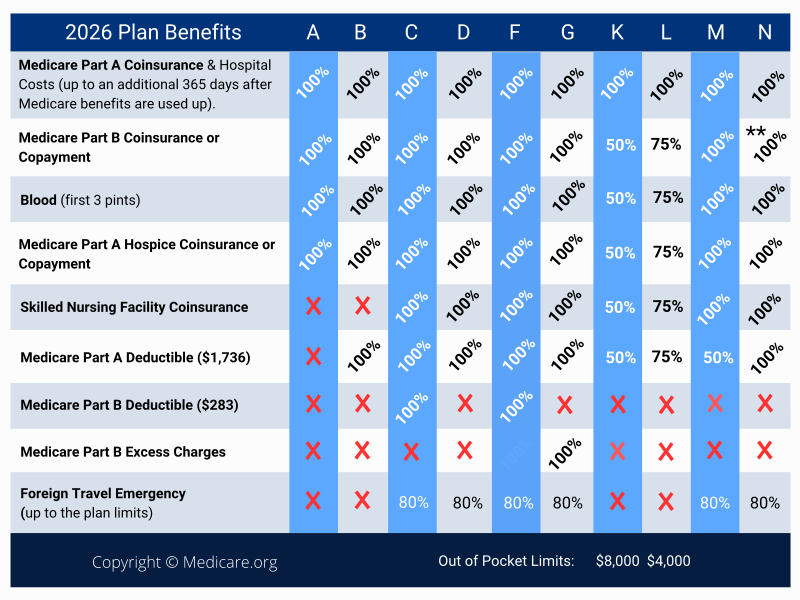
- Standardized Benefits: Each plan type (A–N) offers the same core benefits nationwide, so comparing plans is straightforward.
- Higher Premiums, Lower Surprises: You’ll pay a monthly premium, but have fewer unexpected bills.
For example, Medicare Plan G from one insurer must include the same core benefits as Plan G from another company — only the premiums differ.
The following chart explains how each of the ten standardized plans helps cover the cost gaps:
Key Differences at a Glance
| Feature | Medicare Advantage | Medicare Supplement (Medigap) |
|---|---|---|
| Coverage Source | Private insurer replaces Original Medicare | Works with Original Medicare |
| Prescription Drugs | Often included (Part D) | Must buy separately |
| Network Restrictions | Yes (HMO/PPO) | No – any Medicare provider |
| Extra Benefits | Often (dental, vision, fitness) | Not included |
| Monthly Premium | Usually lower | Usually higher |
| Out-of-Pocket Costs | Pay-as-you-go (copays, coinsurance) | Minimal – predictable costs |
| Best For | Budget-conscious, healthy enrollees | Frequent healthcare users or travelers |
Choosing the Right Fit for You
There’s no one-size-fits-all answer — it depends on your health, lifestyle, and budget.
When Medicare Advantage Might Make Sense
- Good Health, Limited Healthcare Needs: You rarely visit doctors and prefer low or $0 premiums with extras.
- Extra Benefits Matter: Vision, dental, hearing, and wellness programs are important to you.
- Network Comfort: You’re fine using in-network providers or a local doctor list.
- Bundled Simplicity: You like having medical, hospital, and drug coverage in one plan.
Find Plans in your area with your ZIP Code
When a Medicare Supplement May Be Better
- Chronic Health Needs: You visit doctors often or have ongoing conditions and want predictable costs.
- Travel Freedom: You want to see any doctor who accepts Medicare nationwide without referrals.
- Financial Predictability: You’d rather pay higher monthly premiums to avoid surprise bills later.
FAQs About Medicare Advantage vs. Medicare Supplement
What is the difference between Medicare Advantage and Medicare Supplement?
Medicare Advantage (Part C) replaces Original Medicare with coverage from a private insurer, often including extra benefits. Medicare Supplement (Medigap) works alongside Original Medicare to cover out-of-pocket costs like deductibles and coinsurance.
What are the negatives of a Medicare Advantage plan?
Medicare Advantage plans can limit you to in-network providers, require referrals, and include variable copayments. Out-of-network coverage may be limited or unavailable.
What is the downside to Medicare Supplement plans?
Medicare Supplement plans usually have higher monthly premiums than Medicare Advantage and don’t include dental, vision, or prescription drug coverage.
Why are people leaving Medicare Advantage plans?
Some beneficiaries leave Medicare Advantage due to network restrictions, annual benefit changes, or higher out-of-pocket costs, preferring the flexibility of Original Medicare plus a Supplement plan.
Which is better — Medicare Supplement or Medicare Advantage?
It depends on your priorities. Medicare Supplement offers predictable costs and broader provider access, while Medicare Advantage may offer lower premiums and added benefits.
Conclusion
Choosing between Medicare Advantage and Medicare Supplement is about finding the best fit for your needs. Compare your healthcare usage, provider preferences, and budget carefully before enrolling. A well-informed decision today can give you peace of mind and stronger coverage tomorrow.
Page content independently curated and maintained by David W. Bynon, Medicare Technical Operator, using a standardized, data-driven methodology designed for accurate, non-commercial Medicare plan interpretation and resolution.